
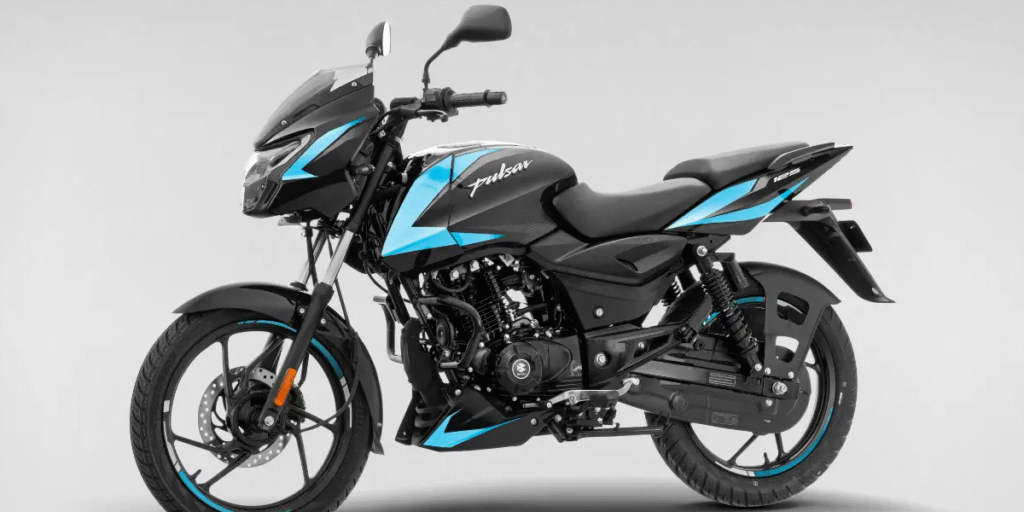
For over two decades, the Pulsar brand has held a special place in the hearts of Indian motorcyclists. When Bajaj first introduced the Pulsar series back in 2001, it completely revolutionized the domestic market by offering raw, aggressive styling paired with punchy performance at a price point regular buyers could actually afford.
Fast forward to 2026, and the Pulsar lineup has ballooned into a massive family. From piddly 125cc commuter options to aggressive 400cc machines, Bajaj has experimented with almost every engine capacity imaginable. While enthusiasts and purists might debate whether diluting the legendary nameplate down to a entry-level commuter is good for the brand’s legacy, the sales figures tell a very simple story: the Pulsar name sells.
The 2026 update for the Bajaj Pulsar 125 brings significant technology and equipment updates aimed at keeping this classic design relevant in an increasingly modern, high-tech market segment. If you are looking to own a motorcycle with that iconic muscle tank without breaking the bank, this remains the most accessible entry point into the Pulsar universe.
Here is an in-depth look at everything the updated Pulsar 125 has to offer, how it performs in the real world, and whether it deserves a spot in your garage.
2026 Bajaj Pulsar 125: At a Glance
| Parameter | Specification / Key Detail |
| Engine Type | 124.4cc, Single-Cylinder, 4-Stroke, Air-Cooled DTS-i |
| Maximum Power | 11.8 PS @ 8,500 rpm |
| Peak Torque | 10.8 Nm @ 6,500 rpm |
| Transmission | 5-Speed Gearbox |
| Fuel Compatibility | E20 Flex-Fuel & BS6 Phase-2 (OBD-2) Compliant |
| Front Suspension | 31mm Telescopic Forks |
| Rear Suspension | Twin Gas-Charged Shock Absorbers |
| Brakes | 240mm Front Disc / 130mm Rear Drum (Combined Braking System) |
| Seat Height | 790 mm |
| Ground Clearance | 165 mm |
| Kerb Weight | 144 kg |
| Fuel Tank Capacity | 11.5 to 15 Litres (variant dependent) |
| Real-World Mileage | 50 km/l to 55 km/l |
| Starting Price | ~₹92,800 to ₹1,04,318 (Ex-Showroom) |
Design and Visual Appeal: Nostalgia Meets Modern Lighting
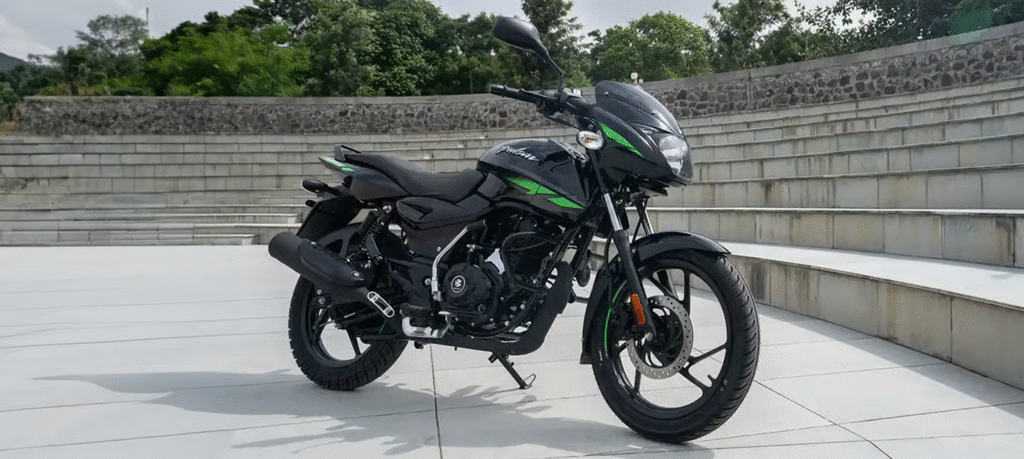
The visual outline of the Pulsar 125 heavily borrows from the second-generation Pulsar 150/180 duo that first debuted around 2008. While some critics might call the silhouette dated, there is an undeniably strong fan base that still adores this classic, muscular stance. It offers a big-bike feel that slimmer, traditional commuters like the Honda Shine simply cannot match.
       [ CLASSIC PULSAR SILHOUETTE ]
                  __
     /\_         /  \____  <-- Muscular Fuel Tank
    /   \_______/    \   \
   |  (o)  LED  |     |   |
    \___________/\___/___/  <-- New LED Headlight Assembly
     /    \          /    \
    (  O   )        (  O   ) <-- 17-inch Alloy Wheels
     \____/          \____/
Key Design Updates
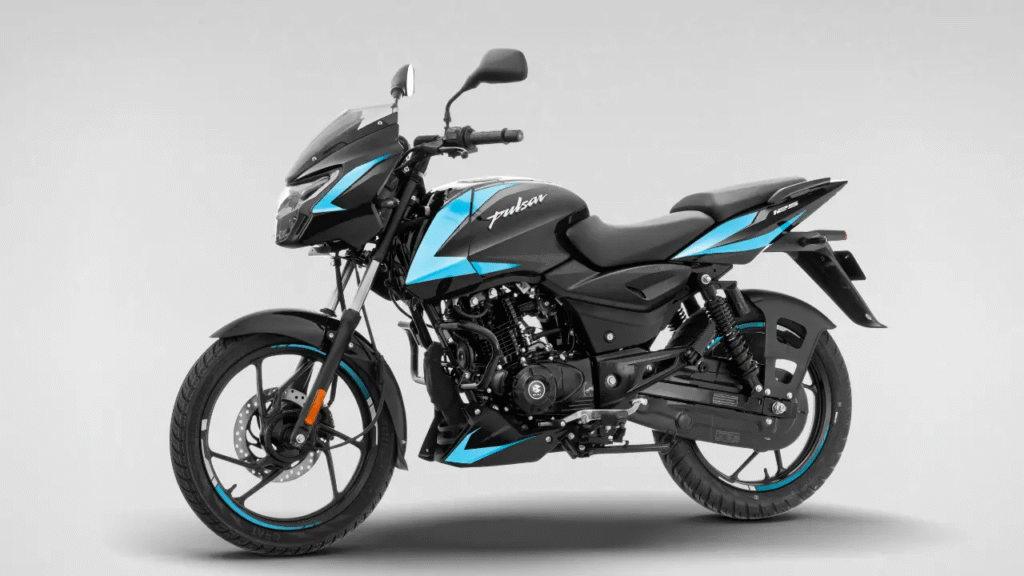
- All-LED Headlight Setup: The 2026 iteration replaces the old halogen unit with an all-LED headlight flanked by twin iconic Daytime Running Lights (DRLs) right above it—a style borrowed directly from the updated Pulsar 150.
- Full LED Indicators: The halogen turn signals have been swapped out for slim LED indicators, giving the front and rear profiles a much sharper appearance.
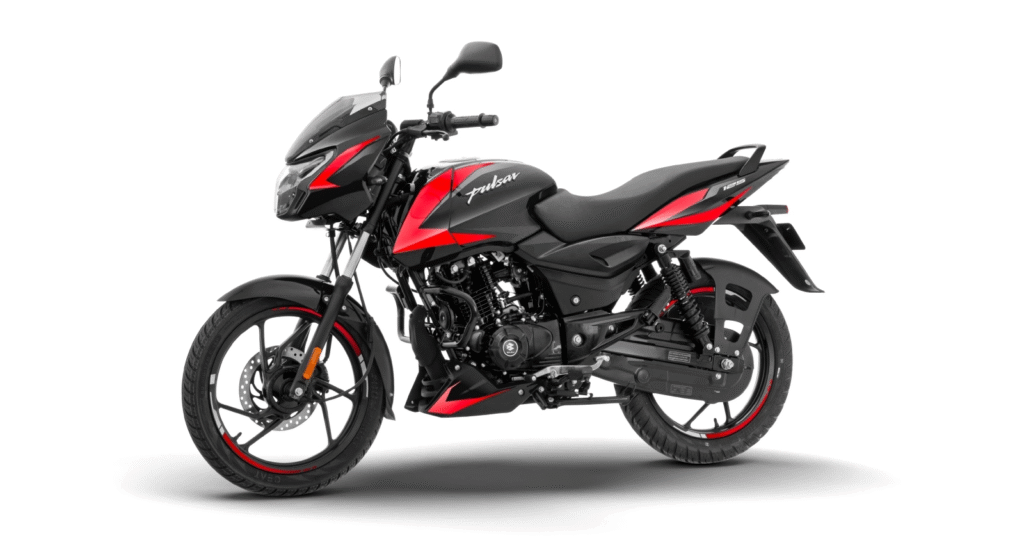
- Fresh Graphics & Color Schemes: Updated sporty decals run across the body panels, tank extensions, and cowl.
- Upgraded Alloy Wheels: Select 2026 trims adopt updated alloy wheel designs sourced from the Pulsar N125, complete with color-coded rim stickers.
Trim Variants and Paint Options
Bajaj structures the Pulsar 125 lineup into two primary aesthetic branches:
- Carbon Fibre Edition (Single-Seat or Split-Seat): Comes with aggressive visual accents, a matching plastic belly pan for extra visual mass, and striking color options including Blue, Red, Black Gold, Black Dark Grey, and Racing Red with Tan Beige.
- Neon Single-Seat Edition: Features a clean, dark base paint with subtle neon-colored highlights applied to the tank logo, grab rails, headlight cowl, and wheels. Colors include Black Cyan Blue, Black Race Red, Black Dark Grey, and Racing Red Tan Beige.
Equipment, Features, and Daily Practicality
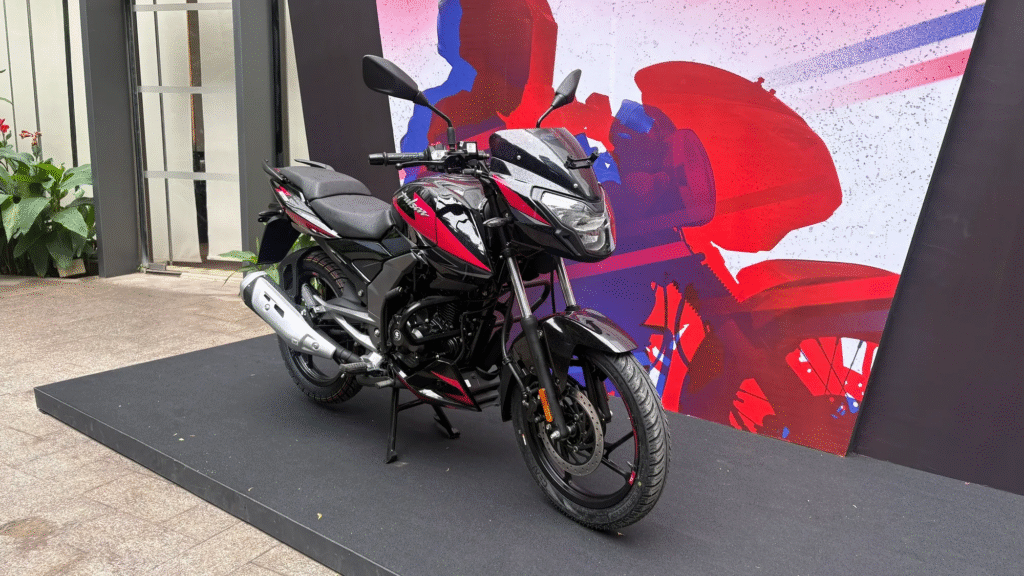
Where older 125cc commuter bikes relied strictly on basic mechanical setups, the 2026 update elevates the technology package significantly to match current buyer expectations.
Digital Console & Smartphone Connectivity
Higher variants of the updated Pulsar 125 feature a reverse-LCD fully digital instrument cluster that replaces the older semi-digital layouts. When paired via the Bajaj Ride Connect mobile app using Bluetooth, the console unlocks several smart features:
- Turn-by-Turn Navigation: Directional arrows right on the display to help you navigate through busy city streets without mounting your phone on the handlebar.
- Call & SMS Alerts: Incoming caller notifications displayed directly on the screen.
- Comprehensive Ride Data: Real-time fuel economy, average mileage readouts, distance-to-empty (DTE), a digital clock, and a clear gear position indicator.
(Note: Lower variants retain the simpler semi-digital console for buyers seeking a more budget-friendly purchase price.)
Night Riding and Everyday Utility
- Illuminated Switchgear: A signature Pulsar flex—the control buttons on the handlebar light up in soft blue at night. The Pulsar 125 remains the smallest displacement motorcycle in India to feature this touch.
- USB Charging Port: A built-in USB port positioned near the handlebar area allows riders to keep smartphones charged on the move.
- E20 Flex-Fuel Ready: Fully compliant with OBD-2 onboard diagnostic requirements and optimized to run smoothly on E20 fuel blends.
Engine Performance, Gearbox, and Highway Capabilities
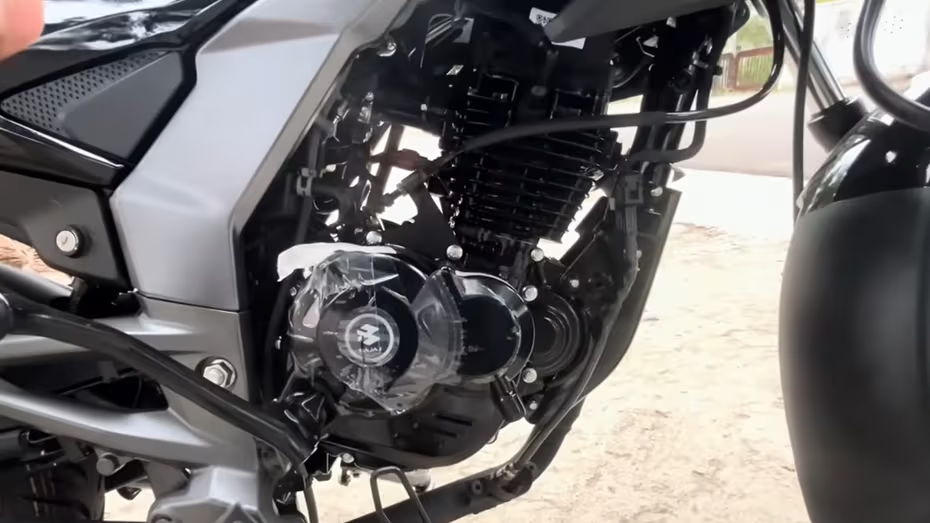
At the heart of the motorcycle is Bajaj’s battle-tested 124.4cc single-cylinder, air-cooled, 2-valve DTS-i engine.
Engine Output Specs
- Power: 11.8 PS at 8,500 rpm
- Torque: 10.8 Nm at 6,500 rpm
- Gearbox: 5-Speed Manual (All-down or standard heel-toe pattern depending on gear lever fitment)
  ENGINE CHARACTERISTICS AT A GLANCE

  [Low RPM (0-4000)]    ===> Sharp throttle response, effortless city crawling
  [Mid RPM (4000-6500)]  ===> Smooth power delivery, flexible pass-power
  [High RPM (6500+)]     ===> Engine feels strained; best kept below 75 km/h
City Rideability
The engine is tuned primarily for low-end torque and rideability. In city traffic, throttle response at lower speeds feels crisp. The motor pulls cleanly in 2nd and 3rd gears, allowing you to filter through slow-moving traffic with minimal gear shifts. Even with a pillion rider on board, the engine resists stalling and handles routine stop-and-go commutes without struggling. The clutch lever pull is light, reducing wrist fatigue during peak traffic hours.
Highway Manners
While the Pulsar 125 excels in urban environments, it shows its limits once you hit open expressways.
- Sweet Spot: The bike comfortably cruises at speeds between 60 km/h and 70 km/h.
- Vibrations & Strain: Pushing past 75 km/h causes noticeable vibrations through the footpegs and handlebars. Overtaking fast-moving traffic requires careful planning and a downshift.
- Wind Stability: At speeds above 80 km/h, the motorcycle can feel a bit unsettled by crosswinds or uneven pavement. It is fundamentally designed for city commutes and short highway link-ups rather than long-distance cross-country touring.
Real-World Mileage and Fuel Range
Fuel efficiency is a critical factor for any 125cc buyer, and the Pulsar 125 delivers solid numbers despite its heavier kerb weight.
       REAL-WORLD FUEL ECONOMY (TESTED)

  City Traffic        :  ~50.0 - 51.5 km/l
  Open Highway        :  ~55.0 - 57.0 km/l
  Combined Average    :  ~53.0 km/l
Depending on the specific variant’s tank size (ranging between 11.5 and 15 litres), you can achieve a theoretical cruising range of anywhere between 600 km and 800 km on a single tank. This long range drastically cuts down your visits to the petrol pump.
Ergonomics, Suspension, and Handling Dynamics
Riding Position and Comfort
The ergonomics strike a balanced middle ground between daily commuter comfort and a sporty posture:
- Handlebars & Footpegs: Raised clip-on handlebars paired with slightly rear-set footpegs create an engaging, sporty stance without putting uncomfortable weight on your wrists.
- Seat Height: At 790mm, the seat is accessible for shorter riders (5’5″ or taller) to easily place both feet flat on the ground.
- Seat Foam Density: Cushioning is on the firmer side. It provides excellent support for 30-to-45-minute city rides, though you may want short breaks on multi-hour journeys to prevent saddle fatigue.
- Pillion Space: Both single-seat and split-seat configurations offer generous room and well-positioned grab rails for a passenger.
Suspension Tuning and Ground Clearance
Suspension is managed by standard 31mm telescopic front forks and twin gas-charged rear shock absorbers.
- Absorbing Bumps: The setup leans toward a slightly firm damping feel. It keeps the bike planted on smooth asphalt and handles small road undulations effortlessly.
- Sharp Potholes: Deep potholes or sharp speed breakers transfer a noticeable thud to the rider’s lower back, as the rear shocks lack the soft plushness of traditional commuter setups.
- Ground Clearance: At 165mm, the belly clearance is sufficient to clear high speed bumps without scraping the underbody panel, even when carrying a passenger.
Chassis and Braking
- Kerb Weight: Weighing in at 144 kg, the Pulsar 125 is significantly heavier than rival 125cc bikes (which often weigh between 116 kg and 123 kg). While this extra mass is noticeable when wheeling the bike out of a parking spot or making high-speed direction changes, it actually helps the bike feel remarkably grounded and stable at city speeds.
- Brakes: Braking hardware includes a 240mm front disc brake and a 130mm rear drum brake, managed by a mandatory Combined Braking System (CBS). Applying the rear brake lever automatically engages a portion of the front brake to prevent wheel lockups.
- Missing ABS: The lack of single-channel ABS—even as an optional add-on—is a minor drawback, especially as wet-weather braking performance on loose gravel requires careful modulation to avoid sliding the rear tire.
Detailed Comparison: Bajaj Pulsar 125 vs. Key Competitors
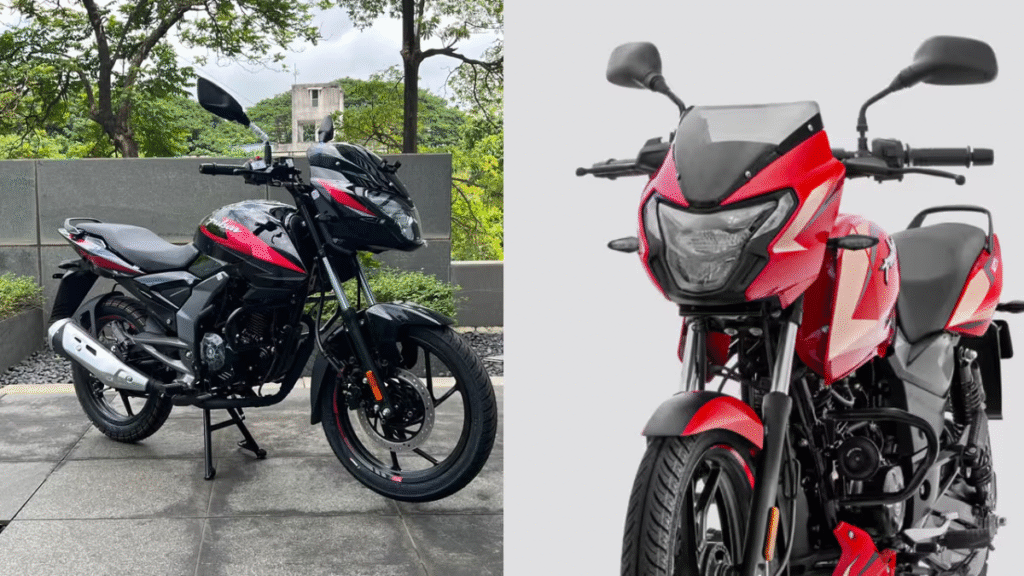
To see how the 2026 Pulsar 125 stack up against popular alternatives, here is a breakdown against its two biggest market rivals: the tech-heavy TVS Raider 125 and the commuter benchmark Honda Shine 125.
| Feature / Spec | Bajaj Pulsar 125 (2026) | TVS Raider 125 | Honda Shine 125 |
| Engine Capacity | 124.4cc DTS-i | 124.8cc 3-Valve | 123.94cc eSP |
| Power Output | 11.8 PS @ 8,500 rpm | 11.38 PS @ 7,500 rpm | 10.74 PS @ 7,500 rpm |
| Torque Output | 10.8 Nm @ 6,500 rpm | 11.2 Nm @ 6,000 rpm | 11 Nm @ 6,000 rpm |
| Kerb Weight | 144 kg (Heaviest) | 123 kg | 114 kg (Lightest) |
| Console Type | Full-Digital LCD | Color TFT / LCD Option | Analog |
| Turn-by-Turn Nav | Yes (Bluetooth) | Yes (Bluetooth) | No |
| Headlight | Full LED | Full LED | Halogen / LED (Variant dependent) |
| Riding Ergonomics | Sporty Commuter (Clip-ons) | Naked Streetfighter | Pure Upright Commuter |
| Target Audience | Classic Pulsar fans, daily commuters | Youthful buyers, tech seekers | Conservative buyers wanting reliability |
How It Compares
- vs. Honda Shine 125: The Shine is significantly lighter, easier to maneuver in extremely tight spaces, and offers a softer ride quality. However, the Pulsar 125 looks far more muscular, produces slightly more top-end power, and offers modern digital features that make the Shine’s analog dash feel ancient.
- vs. TVS Raider 125: The Raider is a purpose-built modern streetfighter with a rev-happy engine and lighter chassis. The Pulsar 125 counters with its solid build, classic heavy-bike stability, and lower entry pricing on base variants.
Which Other Bajaj Bike Should You Consider?
Bajaj’s own portfolio contains alternative choices that might suit your needs better depending on your budget:
- Bajaj Pulsar NS125: Priced roughly ₹6,000 to ₹10,000 higher than top-spec Pulsar 125 variants, the NS125 features a modern perimeter frame, sharper bodywork, and aggressive naked-street styling aimed at younger riders.
- Bajaj Pulsar 150: If your budget allows an extra bump of around ₹15,000 to ₹20,000, stepping up to the classic Pulsar 150 delivers a larger engine, superior highway passing power, and the added safety net of single-channel ABS.
The Verdict: Is the 2026 Pulsar 125 Worth Buying?
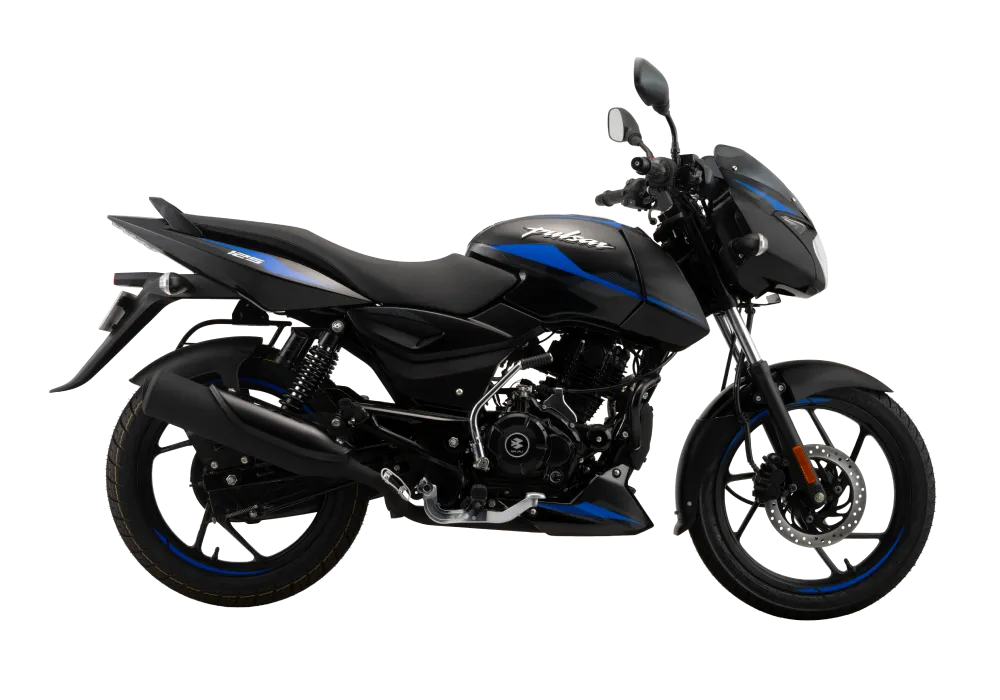
The 2026 Bajaj Pulsar 125 is a successful blend of nostalgia and modern tech. It takes a timeless design that Indian buyers have loved for over fifteen years and equips it with the digital features needed to stay competitive in 2026.
       PROS AND CONS SUMMARY

  ADVANTAGES                       CONSIDERATIONS
  ------------------------------   ------------------------------
  + Iconic, muscular design        - Heavier than rivals (144 kg)
  + Bluetooth navigation & LED     - Strained at speeds >75 km/h
  + Tractable engine for city      - No ABS option available
  + Illuminated switchgear         - Firm rear suspension
If you value everyday usability, low running costs, robust build quality, and that classic Pulsar aesthetic, the Pulsar 125 remains one of the best value-for-money options in the 125cc commuter segment today.